Acting for Creation Bulletin #19 (26/03/2026)
Acting for Creation Together in Gippsland
ACTinG seeks to encourage and equip Gippsland Anglicans to study the theology of creation; and to pray and act to safeguard, sustain and renew the life of the Earth.
Email us: acting@gippslandanglicans.org.au
We would love to hear from you.
This month’s bulletin from Cath focuses on one of the aims of ACTinG: to live simply:
Radical Simplicity – a life fully lived
Several years ago, whilst working as an activities co-ordinator for an aged care facility, I took a group of residents on an outing to a large, recently renovated, shopping centre. Accompanied by a new volunteer, a friendly woman in her mid-fifties, we assisted the residents off the bus and entered the cathedral-sized glamour of this spacious mall. My volunteer, her eyes alight with wonder, turned to me and exclaimed: ‘Within these walls is everything I would ever need!’ Such are the trappings of consumerism.
According to the recent United Nations backed report on biodiversity released by the Intergovernmental Science-Policy Platform on Biodiversity and Ecosystem Services (IPBES), human destruction of nature is rapidly eroding the planet’s capacity to provide food, water and security to billions of people. A few particularly concerning findings: fisheries in the Asia Pacific region are expected to reach zero fish stock by 2048, freshwater availability in the Americas has halved since the 1950s and forty-two percent of land species in Europe have declined in the past decade. ‘The time for action was yesterday or the day before,’ said Robert Watson, the chair of the report.1
With horror we look at the results of environmental and social poverty brought on by the ideology of rampant consumerism. We are all too familiar with the destruction of both habitat and community that exists because of the mandate that ever-increasing consumption is essential to a flourishing economy. Earth cannot survive this abuse. The continuous pursuit of material possessions has not brought about a perfect world; rather, we see greed, corruption and injustice undermining our world. As Irish philosopher and poet John O’Donohue so aptly tells us:
It is poignant that despite maturity and judgement there remain visceral appetites within your heart which crave immediate satisfaction. Once awakened to a certain intensity, they race towards the object of desire. Your ability to discern or distance yourself from this drive becomes redundant. The adult returns almost to a childlike single-mindedness. In this sense, the consumerist attitude is an obsessive and uncritical passion… It touches our longing in a very concrete way. It ensures that it always targets the pocket as well as the heart. This is done with consummate skill so that we inevitably find ourselves magnetically attracted to the advertised icon, buying it and bringing it home. The advertisement is a tiny thought-package inserted deftly into the mind; once it opens and expands, its control over us is immense.2
Grim words indeed. Amidst this destruction there stands an alternative voice. It is the voice of a life of radical, voluntary simplicity that shines out as a prophetic, counter-cultural response to the dominant ideology of the so-called ‘first world’. It is a voice of hope that speaks directly into the deepest of human hungers. In addition, radical simplicity brings the life-giving benefit of healing to our planet.
What, then, is voluntary simplicity? It is much more than a life of frugality, for whilst that is a key element, it is about something far broader. Simplicity is a lens through which to view all of life. ‘At its core it is voluntary limitation of our outer wealth so that we can have greater inner wealth… Thus a life with less – less work, less stuff, less clutter – becomes more: more time for friends, family, community, creativity, civic involvement. Less stress brings more fulfilment and joy. Less rushing brings more satisfaction and balance. Less debt brings serenity. Less is more.’3
Radical simplicity is a stance of trust. It means returning to a posture of dependence, for a life of simplicity is grounded in the practice of poverty that reminds us of the abundance of life as gift given. It means that we live close enough to the limits of our resources so that we can rely on providence and appreciate the beauty of life. Simplicity fosters spontaneity and truthfulness. Simplicity is also a core requirement for anyone who seeks justice, peace and equitable stewardship of resources. Simplicity is not simply living with less; it requires serious reflection to sort out what is of necessity and what is of luxury. This may not be an easy road to take; to consciously choose a way of life that strips itself free of the dominant message of consumerism invites ridicule and misunderstanding. Our media portrays those who choose a life of radical simplicity as being regressive in a stance of anti-technology and anti-innovation. Alternatively, they can be depicted as living a shallow simplicity in which switching to using low-energy light bulbs and a fuel-efficient car is expected to bring about the depth of philosophical and theological change needed for a life free of the desire to consume.
Consciously choosing simplicity is radically counter-cultural. It is asking us to take a stance far broader than the dominant culture dictates, to see a landscape where less is more and people make conscious choices about their consumerism. ‘It’s choosing freely instead of being manipulated. I think of it as “the examined” life, a life at which we look at the consequences of our behaviours in terms of the wellbeing of people and the planet. It’s making conscious choices about what’s important and what matters. It’s stripping away the inessential so the essential shines through.’4
At its core, radical simplicity is not about poverty; it is about love. In freeing ourselves from unnecessary possessions – in choosing a life of radical simplicity – we discover love. This is the love that we witness in the lives of countless millions of people in our 21st century who, in their own actions offer lives of service to the marginalised, victimised and destitute. It is witnessing all those who understand that consumerism offers lives of sacrifice; sacrificing time with family, artistic creativity, freedom to choose - where simplicity offers lives of opportunity; an abundance of freedom to delight in passions of creativity. Simplicity creates the opportunity for greater fulfilment in work, compassion for others, feelings of kinship with all life and awe of participating in a living universe.
How then do we speak into the collective mindset that has been taught that to desire and then purchase a product will assuage the hunger of not being enough? One way is to speak about desire, for without desire there would be no consumption. For radical simplicity to take off, ‘we must give people a vision of this new life, a vision that is so exciting and compelling that people will do anything they can to realise that vision. Instead of shaking our fingers at people for their consumerism, we must help them discover a way of life in which they lose the desire to consume.’5
The conversation then becomes around joy, of removing oneself from the pull of consumer products by speaking of the joy of having enough time to spend with family, of spacious time previously spent on acquiring money now freed for reading, creating, walking, listening, music-making, observing, community-building. Indeed, the conversation becomes one of a grace-filled life. To live gracefully is to live within flowing rhythms at a human pace. In a graceful life, there is time to pay respect to the value of what you do, to the worth of those you care for and to the possessions you own. To live gracefully is to know that who you are is more than enough, that you are of worth because of your existence, rather than through a measure of your possessions. Sounds good to me.
1 E. S. Brondizio, J. Settele, S. Díaz, and H. T. Ngo (Eds), ‘Global Assessment Report on Biodiversity and Ecosystem Services’, Intergovernmental Science-Policy Platform on Biodiversity and Ecosystem Services. IPBES secretariat, Bonn, Germany, 2019.
2 John O’Donohue, Eternal Echoes: Exploring our Hunger to Belong, Bantam Books, 1998, 118.
3 Cecile Andrews & Wanda Urbanska, Less is More: Embracing Simplicity for a Healthy Planet, a Caring Community and Lasting Happiness, New Society, 2009, xiv.
4 Cecile Andrews, ‘The Circle of Simplicity’, in Less is More, 54.
5 Cecile Andrews, ‘The Circle of Simplicity’, in Less is More, 60.
Peace be with you,
From the ACTinG team
ACTinG Bulletin #3 (6/6/2024)
Read:
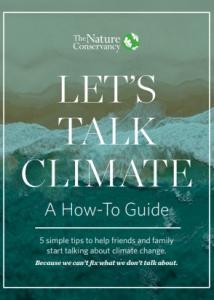
E-book (ten pages): Let’s talk climate: a how-to guide. 5 simple tips to help friends and family start talking about climate change. Because we can’t fix what we don’t talk about. The Nature Conservancy. 2023. DOWNLOAD using the link below…
Visit The Nature Conservancy Australia website.
Watch:
A brief introduction (4:33 min) to the world-wide Anglican Communion Forest, a global initiative of local activities: forest protection, tree growing and eco-system restoration. Find out what’s happening and how you can join in.
Visit the Anglican Communion Forest website.
Gippsland Anglicans